By English Test Coach · Updated
Academic Task 1 · Sequence, material changes and branching routes
IELTS process diagrams: follow the system the arrows show
Identify where the process starts, whether it ends or repeats, and whether every item follows the same route. Then group related stages and describe the changes clearly, using the labels and arrows to control what you include.
These three simplified original diagrams have complete practice questions and annotated reports. They are teaching material, not recalled IELTS questions, examiner-scored answers or complete accounts of industrial or natural systems.
Linear process: follow the numbered paper-making stages
Original paper-making question
The diagram shows a simplified process for making recycled paper sheets from used paper. Summarise the information by selecting and reporting the main features, and make comparisons where relevant.
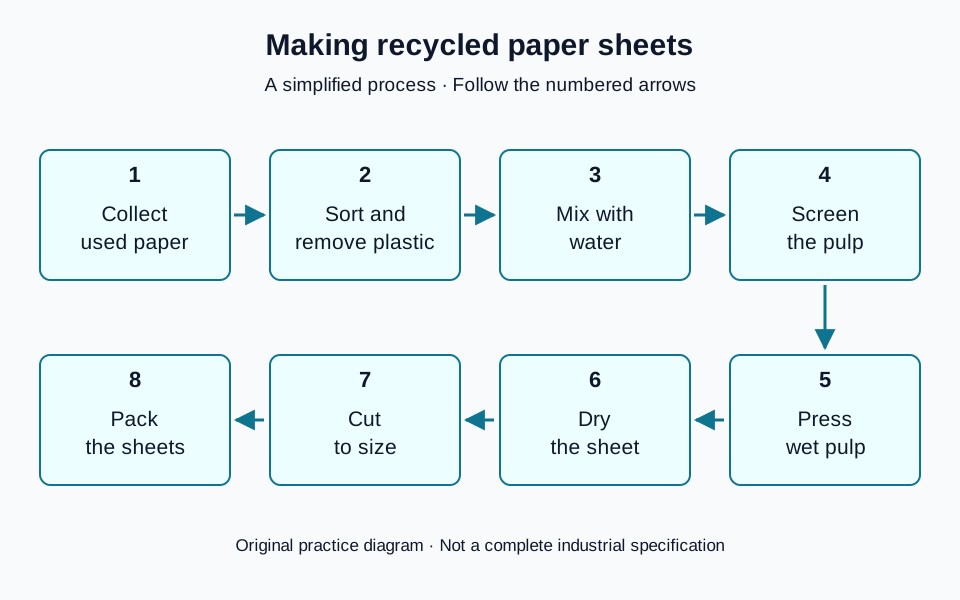
Read the paper-making stages as text
- Collect used paper
- Sort the paper and remove plastic
- Mix with water
- Screen the pulp
- Press the wet pulp
- Dry the sheet
- Cut it to size
- Pack the sheets
The top row runs left to right through stages 1–4. The arrow then moves down on the right. The bottom row runs right to left through stages 5–8. No return arrow is shown.
The lower row does not follow ordinary reading order. Starting it at the left would place packing before pressing and drying. Trace the arrows before deciding how to organise the report.
Track the material names as well as the actions: used paper becomes pulp, then a sheet and finally packed sheets. The diagram labels water entering the preparation stage and plastic being removed during sorting. It supplies no chemical treatments, temperatures or named machinery.
Use the overview for the route and main transformation
One possible paper-process overview
“Overall, the process has eight stages, beginning with the collection of used paper and ending with packed sheets. It moves from preparing and screening the pulp to pressing, drying and finishing the paper, with no return loop shown.”
This identifies the start, end and broad phases. The stage count helps here because the source numbers the operations clearly. A count alone would tell the reader little about what happens.
Detail paragraph 1: preparation
Describe collection, sorting and plastic removal, mixing with water, and screening. Keep the sequence clear and mention the materials explicitly where they enter or leave the route.
Detail paragraph 2: forming and finishing
Follow pressing, drying, cutting and packing in that order. Use the changing material names to connect the sentences, rather than beginning every sentence with “then”.
The page layout helps you read the source; the finished report can describe the process without repeatedly saying “top row” or “bottom right”. Read the complete paper-making report and annotations, then try describing the second phase in your own words.
Cyclical process: distinguish the return loop from the exit
Original bottle-return question
The diagram shows a simplified system for collecting and reusing glass bottles. Summarise the information by selecting and reporting the main features, and make comparisons where relevant.
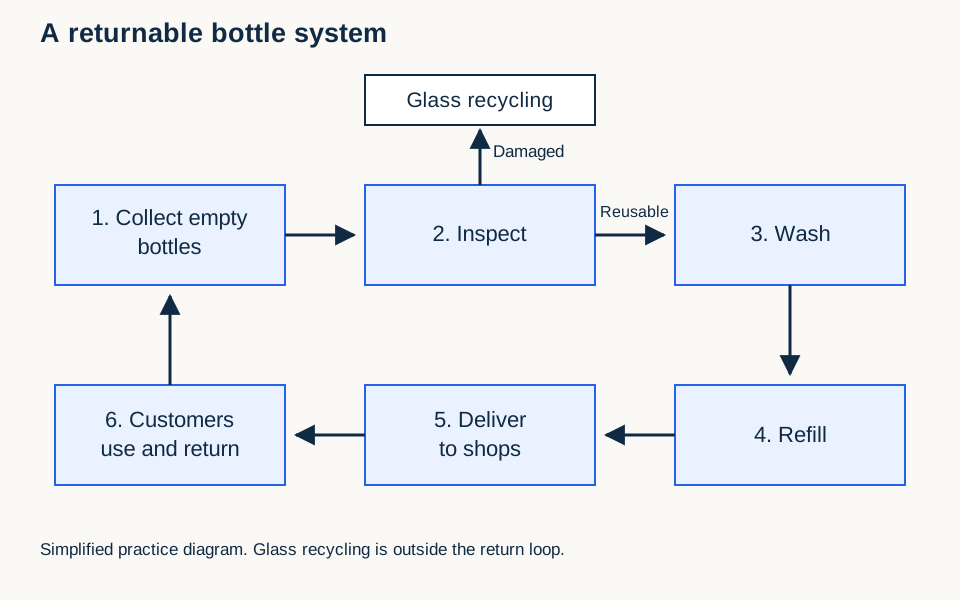
Read the bottle-return routes as text
- Collect empty bottles
- Inspect them
- Wash reusable bottles
- Refill the bottles
- Deliver them to shops
- Customers use and return the bottles to collection
Separate exit at inspection: damaged bottles go to glass recycling. They do not continue to the washing and refilling stages in the route shown. No arrow brings the recycling output back into this diagram.
One possible cycle overview
“Overall, the six-stage main route returns bottles from customers to collection for further inspection and reuse. At inspection, damaged bottles leave the loop for glass recycling, while reusable bottles continue to washing and refilling.”
The source has six numbered stages in the main cycle and an additional branch. Calling recycling “the seventh stage” that follows customer use would put it in the wrong place and imply that every bottle takes that route.
One detail paragraph can cover collection, inspection, the damaged-bottle exit and washing. Another can describe refilling, delivery, customer use and return. Close the loop explicitly: the return arrow leads to collection, so the next cycle includes inspection again.
Do not add what happens inside the separate recycling system. The diagram does not show glass being melted, new bottles being made or recycled material rejoining this loop. It also does not state how many times any bottle can be reused. Compare the complete bottle-return report with the linear paper example.
Natural cycle: choose a starting point and preserve both return routes
Original water-cycle question
The diagram shows selected routes in a simplified coastal water cycle. Summarise the information by selecting and reporting the main features, and make comparisons where relevant.
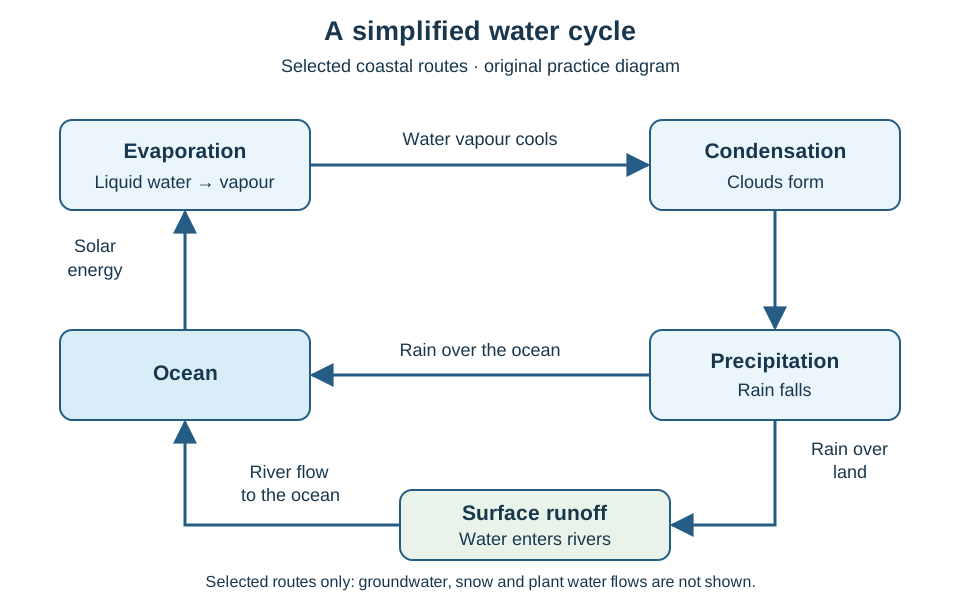
Read the water-cycle routes as text
- Ocean water evaporates, with energy supplied by the sun. Liquid water becomes water vapour.
- The water vapour cools and condenses, forming clouds.
- Precipitation falls as rain. The diagram shows two return routes, not two consecutive rainfall stages.
- Rain over the ocean returns water directly to it.
- On land, surface runoff enters rivers. The rivers flow towards the ocean, completing the other return route.
Ocean water can evaporate again. The ocean is a convenient starting point for describing this cycle, not its one true beginning or a final endpoint. This simplified diagram selects only some routes; groundwater, snow and plant water flows are not shown. It supplies no quantities or journey times.
A natural cycle has no required first stage. Taking the ocean as your starting point makes this diagram straightforward to describe, but does not mean the water cycle began there. Group evaporation and cloud formation in one detail paragraph, then contrast direct rainfall with the surface-runoff and river route in another.
One possible natural-cycle overview
“Overall, ocean water enters the atmosphere as vapour and returns as rain, either directly over the ocean or indirectly via surface runoff and rivers on land. The two return routes join at the ocean, from which evaporation can occur again.”
“Water evaporates”, “vapour cools and condenses” and “rivers flow” use the active voice because they describe natural changes or movement. Forcing every stage into “is evaporated by workers” would invent a human operator. Conversely, “energy is supplied by the sun” is a useful passive form when you want to focus on the energy.
Repair a natural-cycle description
Unsupported: “First, workers heat the ocean. All rain then falls on land, where it passes through rivers. Finally, the water reaches the sea and the cycle ends.”
One revision: “Ocean water evaporates using solar energy, and the vapour cools and condenses into clouds. Rain returns water directly to the ocean or, in the land route shown, through surface runoff and rivers. At the ocean, evaporation can occur again.”
The repair removes the invented operator, restores the direct rainfall route and keeps the cycle open to repetition. Now start your own description at rainfall. Can you still explain both routes without making them consecutive stages?
Only describe what this source shows. Its surface route does not establish that all rainfall on land enters rivers immediately. Groundwater, snow and water movement through plants belong to the wider water cycle but are omitted here; do not insert them as extra diagram stages. No proportions or travel times are supplied.
Science reference: the USGS explanation of the water cycle describes evaporation, condensation, precipitation and surface and underground flows. This practice illustration is our own simplified selection, not a reproduction of the USGS diagram.
Choose active or passive language to match the source
Use the passive when the material or item is the focus
“The used paper is mixed with water” and “The wet pulp is pressed” describe the labelled actions without inventing who performs them. The basic present passive is is/are + past participle: “The bottles are inspected”, not “The bottles are inspect”.
Keep an active subject when the diagram supplies one
“Customers use and return the bottles” is clear because customers are explicitly labelled. A process report does not need every sentence to be passive. Choose the form that expresses the action accurately.
Use a branch sentence to show the contrast
“After inspection, reusable bottles are washed, while damaged ones are sent for glass recycling.”
Here “while” contrasts the two routes. “After inspection, all bottles are washed and recycled” would erase the distinction. Use words such as “reusable”, “damaged” and “remaining” carefully so the reader knows which items continue.
Describe order without inventing duration
“Next”, “after screening” and “once the sheet has dried” can connect stages. None of these diagrams supplies processing times, so “after two hours” would add an unsupported duration. The number of arrows also does not establish how long a stage takes.
Repair a report that loses the branch
“All empty bottles are washed, refilled and sent to shops. Finally, customers recycle them and the process ends.”
Identify the missing inspection, the misplaced recycling and the missing return arrow before rewriting the extract.
Compare a supported revision
“Collected bottles are inspected first. Damaged items leave the loop for glass recycling, whereas reusable bottles are washed, refilled and delivered to shops. Customers then use and return them to collection, allowing the inspection and reuse sequence to begin again.”
The revision restores the branch and the return point. It does not assume that the damaged bottles become new containers or that every collected bottle is refilled.
- Have you followed the arrows, including any reversed reading direction?
- Does the overview identify a linear route or a cycle?
- Are all labelled stages and important inputs or exits represented?
- Have you grouped related operations without changing their order?
- Does each sentence identify which material or set of items it describes?
- Have you avoided unshown machinery, durations and extra stages?
Use the maps-and-processes lesson for another exercise. To compare locations and functions instead of sequential operations, use the map-report guide.
Write from a diagram, then check the route
Plan the overview and grouped stages, then draft at least 150 words in about 20 minutes. Public AI assessment is paused; the free workspace provides the planner, timer and word count without an account. The rule-based demo is not an AI score.