By English Test Coach · Updated
All sample answersAcademic Task 1 · 176 words
Water cycle: describe the return routes
Choose a starting point in a natural cycle, distinguish direct rainfall from the river route and avoid adding unshown processes.
Study the method: Process diagrams: follow stages, cycles and separate branches →
Worked example: Follow the two return routes in the water cycle →
Band 6 goal: Process sequencing
Complete every task part clearly and organise the response so the reader can follow it. This is a study route, not an examiner score assigned to the answer. How IELTS Writing is assessed.
The question
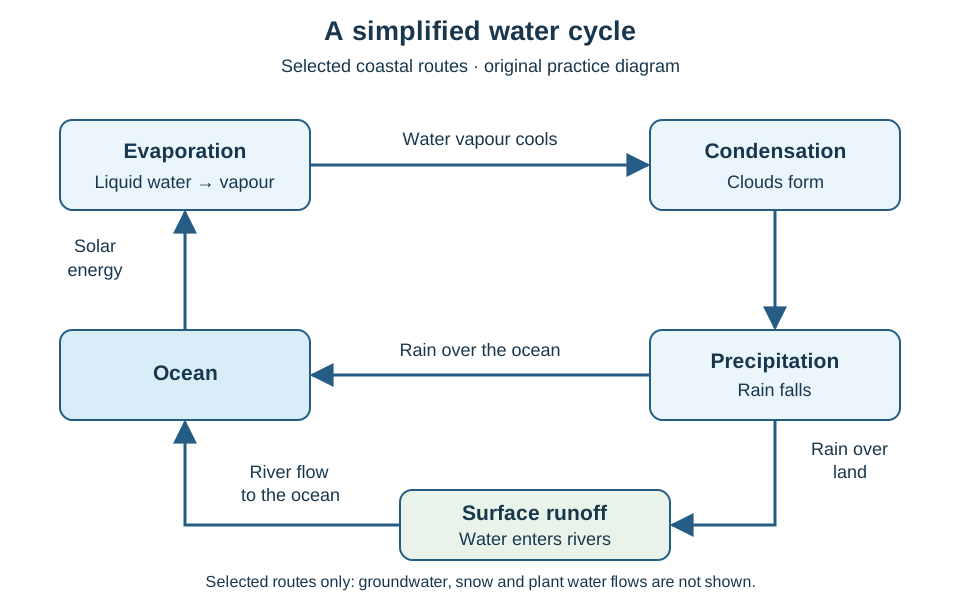
The diagram shows selected routes in a simplified coastal water cycle. Summarise the information by selecting and reporting the main features, and make comparisons where relevant.
 Open full-size diagram (new tab)
Read the water-cycle routes as text
- Ocean water evaporates, with energy supplied by the sun. Liquid water becomes water vapour.
- The water vapour cools and condenses, forming clouds.
- Precipitation falls as rain. The diagram shows two return routes, not two consecutive rainfall stages.
- Rain over the ocean returns water directly to it.
- On land, surface runoff enters rivers. The rivers flow towards the ocean, completing the other return route.
Ocean water can evaporate again. The ocean is a convenient starting point for describing this cycle, not its one true beginning or a final endpoint. This simplified diagram selects only some routes; groundwater, snow and plant water flows are not shown. It supplies no quantities or journey times.
The sample answer
The diagram illustrates selected routes by which water circulates between the ocean, the atmosphere and the land in a coastal setting. It shows evaporation, cloud formation and rainfall, together with two routes through which water returns to the ocean.
Overall, ocean water enters the atmosphere as vapour and returns as rain, either directly over the ocean or indirectly via surface runoff and rivers on land. The two return routes join at the ocean, from which evaporation can occur again.
Taking the ocean as a starting point, liquid water evaporates with energy supplied by the sun. The resulting water vapour cools and condenses, forming clouds. Precipitation then falls in the form of rain. No machinery or human intervention is indicated in these natural processes.
Rain that falls over the ocean returns water directly to it. In the land route shown, surface runoff enters rivers, which carry the water towards the ocean. Water can subsequently evaporate again, continuing the cycle. The diagram gives neither the proportions following each route nor the time required for the water to return.
Vocabulary in context
Each phrase appears in the answer above. Learn how it works, not just a replacement word.
- condenses
- Changes from water vapour into liquid water.
Use the active verb to describe the natural change that forms clouds.
- either directly
- Introduces one of two alternative ways for something to happen.
Complete the comparison with or indirectly; do not present the two rainfall routes as consecutive stages.
- surface runoff
- Water moving across the surface of the land.
This is the land route drawn in the diagram, not an underground water flow.
Now make it your own
Begin a new overview with rain rather than the ocean. Preserve both return routes and explain why the cycle has no final stage. Then identify one process that the diagram explicitly leaves out.
For a smaller practice step, use the explanation, knowledge check and self-review exercise in Describe maps and processes precisely.
The practice link opens the original question, not a copy of this answer.
Open the writing workspaceMore examples of this question type
Identify the start, end and main phases. Follow the arrows, describe each major stage and avoid adding causes, machinery or timings that are not shown.