By English Test Coach · Updated
Academic Task 1 · Processes and stages
A simplified coastal water cycle
An original IELTS practice question with a planning route and a sample answer to learn from.
Aim for at least 150 words in about 20 minutes. Suggested practice level: intermediate, not a predicted band.
Your writing task
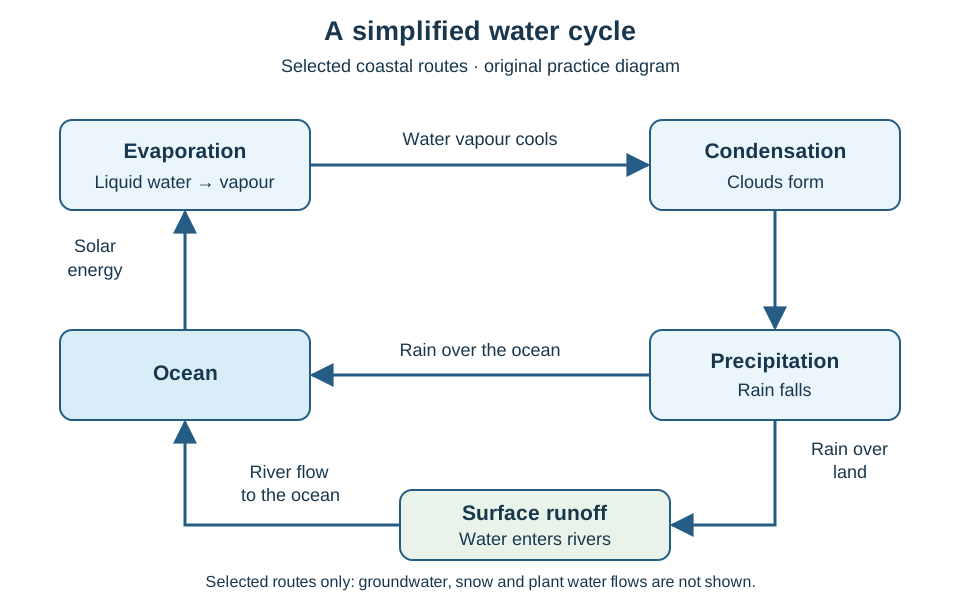
The diagram shows selected routes in a simplified coastal water cycle. Summarise the information by selecting and reporting the main features, and make comparisons where relevant.
 Open full-size diagram (new tab)
Read the water-cycle routes as text
- Ocean water evaporates, with energy supplied by the sun. Liquid water becomes water vapour.
- The water vapour cools and condenses, forming clouds.
- Precipitation falls as rain. The diagram shows two return routes, not two consecutive rainfall stages.
- Rain over the ocean returns water directly to it.
- On land, surface runoff enters rivers. The rivers flow towards the ocean, completing the other return route.
Ocean water can evaporate again. The ocean is a convenient starting point for describing this cycle, not its one true beginning or a final endpoint. This simplified diagram selects only some routes; groundwater, snow and plant water flows are not shown. It supplies no quantities or journey times.
How to approach this question
Identify the start, end and main phases. Follow the arrows, describe each major stage and avoid adding causes, machinery or timings that are not shown.
Process diagrams: follow stages, cycles and separate branches →
Worked example: Follow the two return routes in the water cycle →
Overview: describe a repeating movement between ocean and atmosphere with two return routes. Rain over the ocean returns directly; the selected land route runs through surface runoff and rivers. Neither route is a final endpoint.
Detail grouping: take the ocean as a convenient starting point, explain evaporation and condensation, then contrast rainfall locations and the return routes. Use active verbs for natural changes. Do not add quantities, timings or the groundwater, snow and plant flows omitted from this simplified diagram.
These are possible directions, not required opinions or facts to memorise. Develop your own response and check every claim against the task.
A possible plan
- Introduction: identify what is shown, including the time period or stages where relevant.
- Overview: select the largest changes, main contrasts or overall process without inventing causes.
- Details 1: group related features and support them with accurate data, locations or stages.
- Details 2: cover the remaining main features and make relevant comparisons. Check units, dates and direction of change.
Vocabulary you can use precisely
Choose language that fits your meaning. You do not need to include every phrase.
- condenses
- Changes from water vapour into liquid water.
Water vapour cools and condenses, forming clouds.
- surface runoff
- Water that flows across the surface of the land.
In the land route shown, surface runoff enters rivers.
Ready to write your own answer?
The workspace opens with this question selected, not the sample answer. Plan, write and review your own response. Public AI assessments are currently paused; the writing and study tools remain available.
Start this writing task →