Academic Task 1 · 189 words
Recycled paper: following the stages
Report a complete sequence with an overview, clear material references and no invented equipment or timings.
Study the method: Process diagrams: follow stages, cycles and separate branches →
Band 6 goal: Process sequencing
Complete every task part clearly and organise the response so the reader can follow it. This is a study route, not an examiner score assigned to the answer. How IELTS Writing is assessed.
The question
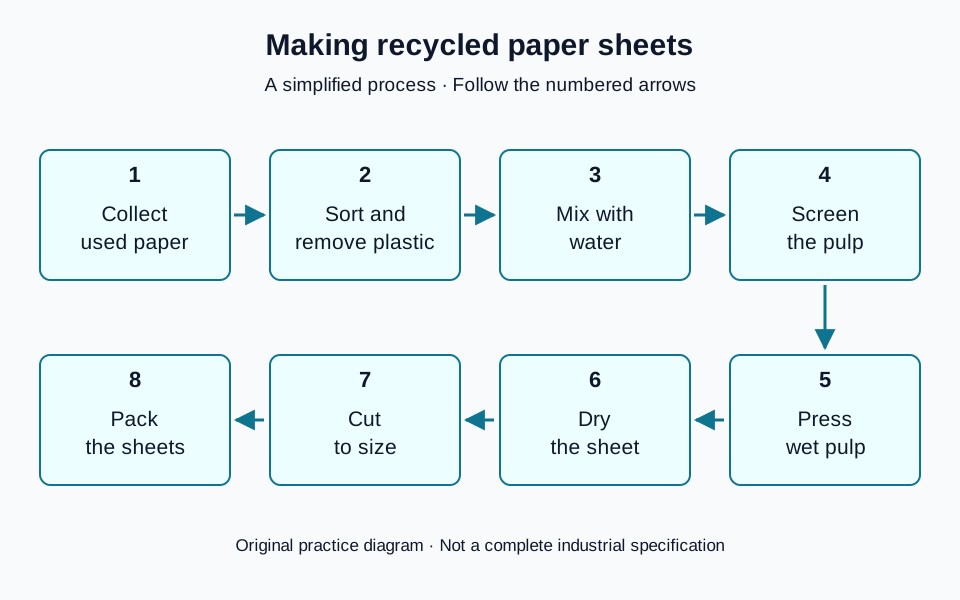
The diagram shows a simplified process for making recycled paper sheets from used paper. Summarise the information by selecting and reporting the main features, and make comparisons where relevant.
 Open full-size diagram (new tab)
The sample answer
The diagram illustrates a simplified method of producing recycled paper sheets from used paper. It presents a sequence of operations that prepares the collected material, turns it into pulp and then forms and finishes the paper before it is packed.
Overall, there are eight stages, beginning with the collection of used paper and ending with the packing of the finished sheets. The sequence moves from preparation and pulp treatment to pressing, drying and finishing. No return loop is shown in the diagram.
First, used paper is collected. It is then sorted, with plastic removed at this stage rather than carried forward with the paper. The sorted material is mixed with water in the third step. After this, the resulting pulp is screened, completing the first four stages shown across the top row.
The wet pulp next proceeds to the pressing stage. In the following step, the sheet is dried and subsequently cut to size. Finally, the cut sheets are packed, which marks the end of the process shown. These last four operations appear along the lower row, proceeding from right to left in the order indicated by the arrows.
Vocabulary in context
Each phrase appears in the answer above. Learn how it works, not just a replacement word.
- is mixed with
- Is combined with another material or substance.
The passive form focuses on the paper and water rather than inventing an operator.
- subsequently
- At a later point in the sequence described.
Use sequencing language selectively; the order should also be clear from the content.
- marks the end
- Indicates the final point in the process shown.
Limit this claim to the diagram; do not add delivery or sale if neither is shown.
Now make it your own
Cover the sample and write a new overview. Then describe stages five to eight without mentioning the page layout. Check that each stage remains in the correct order.
For a smaller practice step, use the explanation, knowledge check and self-review exercise in Describe maps and processes precisely.
The practice link opens the original question, not a copy of this answer.
Open the writing workspaceMore examples of this question type
Identify the start, end and main phases. Follow the arrows, describe each major stage and avoid adding causes, machinery or timings that are not shown.